




When 99.9999% Purity Isn't Pure Enough: How ICP-MS/MS Reveals Ultra-Trace Impurities in 6N Rare Earth Materials
Many people believe that once a rare earth material reaches 99.9999% purity (6N), there is little left to measure.
In reality, the opposite is true.
At this level of purity, product quality is determined not by the major element—but by impurities present at the ppb level or even lower.
For manufacturers of laser crystals, permanent magnets, semiconductor materials, sputtering targets, and high-purity metal oxides, accurately measuring these ultra-trace impurities has become one of the most critical steps in quality control.
Why Measuring 6N Rare Earths Is So Difficult
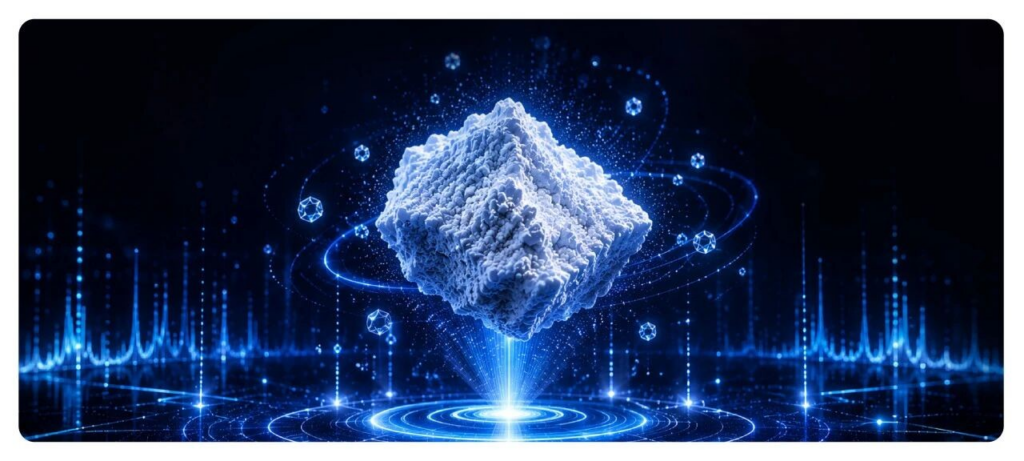
High-purity rare earth matrices create one of the most challenging environments for ICP-MS.
The concentration difference between the matrix and target impurities may exceed tens of millions of times.
Meanwhile, rare earth oxides, hydroxides, and polyatomic ions generate severe spectral interferences.
The result?
The instrument may detect a signal—
but not necessarily the correct signal.
This is why many laboratories still rely on:
- ·column separation
- ·matrix removal
- ·complex correction methods
These approaches improve accuracy, but they also increase analysis time and reduce method reproducibility.
Why Triple Quadrupole ICP-MS/MS Changes the Workflow
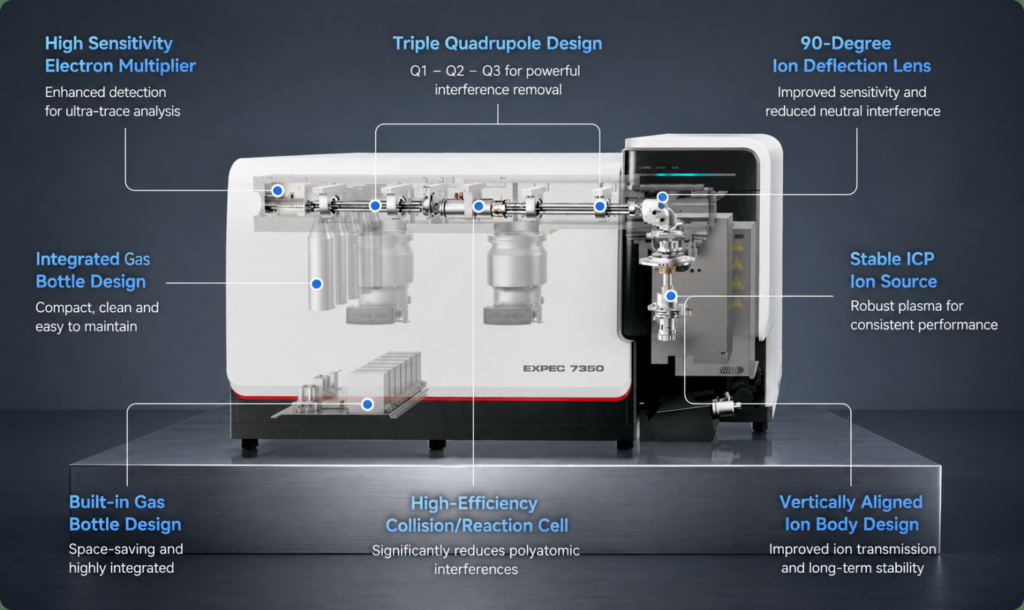
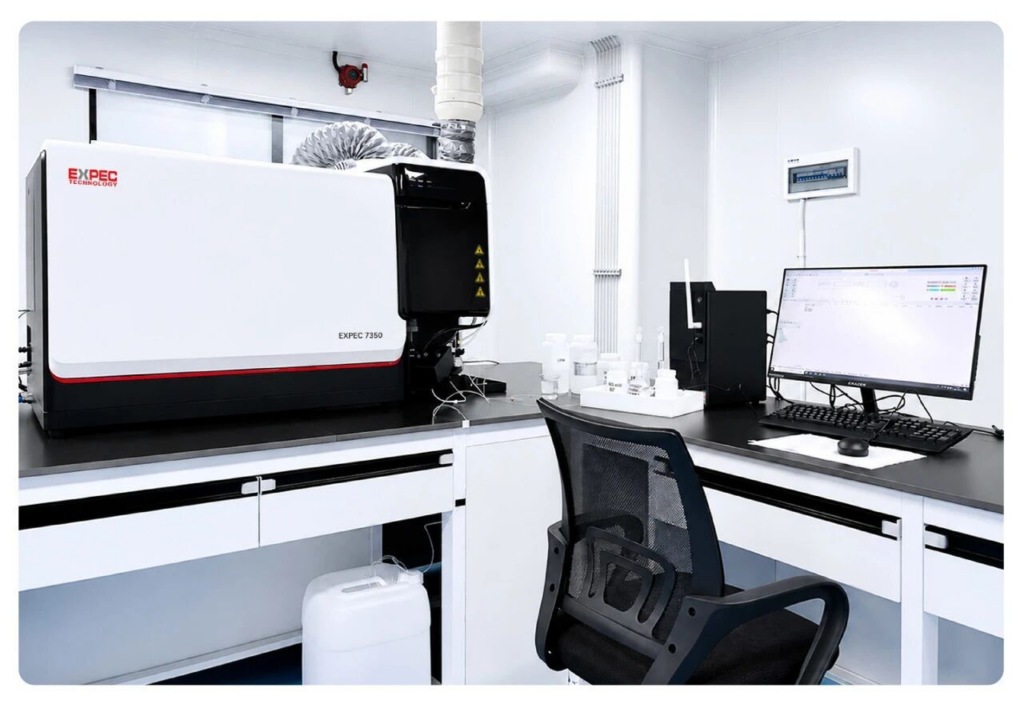
Rather than relying only on sample preparation, EXPEC 7350 Plus ICP-MS/MS removes interference inside the mass spectrometer.
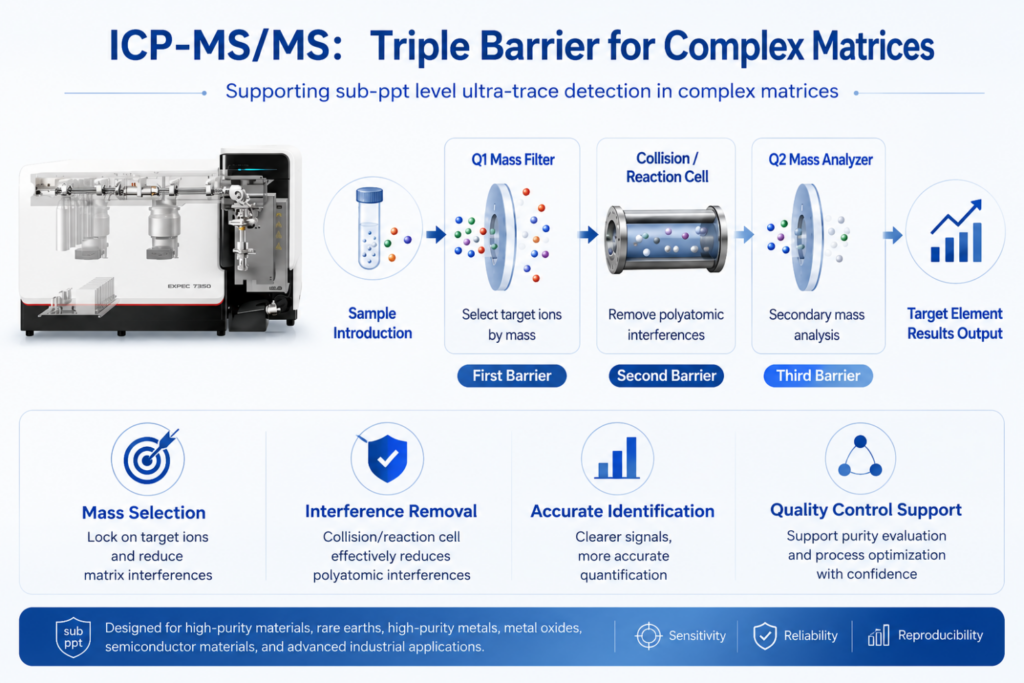
Its triple quadrupole architecture works like three layers of protection.
First barrier – Q1
Only ions with the selected mass are allowed into the reaction cell.
Second barrier – Collision/Reaction Cell
Polyatomic interferences are removed through optimized collision or reaction chemistry.
Third barrier – Q2
Residual interference is filtered again, allowing only the target analyte to reach the detector.
Instead of simply detecting lower concentrations, the system enables laboratories to distinguish true impurity signals from background interference.
Practical Results Matter More Than Detection Limits
Detection limits are important.
Real sample results are even more valuable.
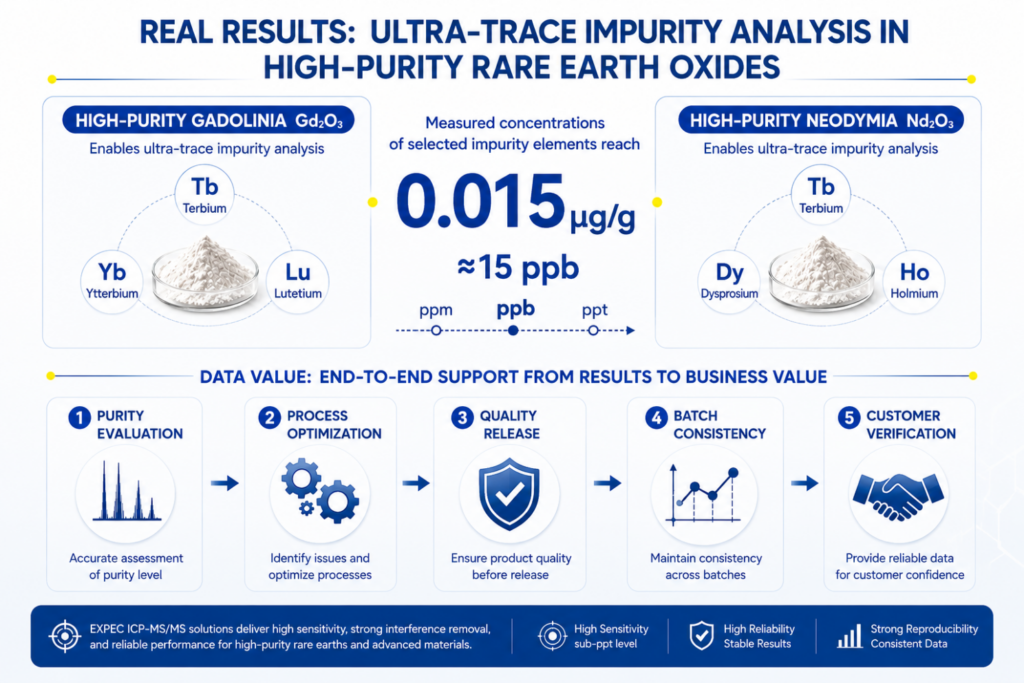
Using EXPEC 7350 Plus, ultra-trace impurities such as:
- ·Tb
- ·Yb
- ·Lu
were successfully quantified in high-purity gadolinium oxide.
Some impurity concentrations reached approximately 15 ppb.
Additional applications included high-purity neodymium oxide, where trace levels of Tb, Dy and Ho were accurately determined despite the complex rare earth matrix.
These are actual sample measurements, not theoretical instrument specifications.
Beyond Instrument Performance
For manufacturers of high-purity materials, analytical capability directly influences:
- ·product grading
- ·process optimization
- ·batch release
- ·customer qualification
- ·production consistency
Making materials purer is only half of the challenge.
Proving that purity with reliable analytical data is equally important.
Application-Driven ICP-MS/MS Solutions
The EXPEC 7350 Plus is designed for laboratories working with:
- ·High-purity rare earth materials
- ·High-purity metals
- ·Refractory metals
- ·Metal oxide powders
- ·Semiconductor materials
- ·Electronic-grade chemicals
Beyond the instrument itself, EXPEC provides integrated application support covering:
- ·sample preparation
- ·interference reduction strategies
- ·method development
- ·data analysis
- ·laboratory workflow optimization
Helping laboratories achieve not only lower detection limits—but higher confidence in every measurement.
