

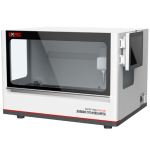
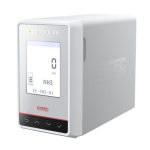
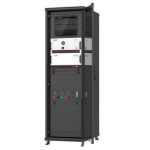
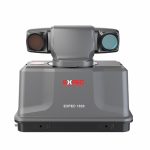
Durian is a key pillar crop of Vietnam’s agricultural exports, currently accounting for over 40% of the country’s total fruit and vegetable export value. Before durian can be exported, it must undergo testing for illegal dyes, heavy metals, and pesticide residues. To meet this need, EXPEC Technology, a subsidiary independently incubated by FPI, offers a comprehensive testing solution built around Liquid Chromatography-Triple Quadrupole Mass Spectrometer (LC-MS/MS) and complemented by Inductively Coupled Plasma Mass Spectrometry (ICP-MS), with each instrument conducting independent analysis for different testing parameters — providing reliable data support for durian export quality control in Vietnam.
At a durian pulp sample and export testing laboratory in Vietnam, a second LC-MS/MS unit has been successfully installed and put into operation. The project was delivered in close cooperation with EXPEC’s local distributor, VIETNAM BIOCHEMICAL ENGINEERING COMPANY LIMITED (VNBC). Additional LC-MS/MS and ICP-MS units will continue to arrive in the coming period, further enhancing the laboratory’s testing capabilities. LC-MS/MS and ICP-MS each play a distinct role: LC-MS/MS is primarily used to detect Auramine O and certain pesticide residues, while ICP-MS focuses on the analysis of inorganic elements such as cadmium (Cd). Working in tandem, the two instruments together provide comprehensive analytical capability spanning both organic contaminants and inorganic elements.


During analysis, durian pulp — characterized by high sugar, high fat, and high levels of natural pigments — represents a typical complex food matrix. In LC-MS/MS analysis, such matrices can readily cause ion suppression, chromatographic interference, and ion source contamination, placing high demands on sample cleanup, chromatographic separation, and the instrument’s long-term stability.
The target analyte for this project is trace-level illegal dye Auramine O. The client required a method that not only achieves a low limit of detection, but also maintains strong qualitative accuracy, quantitative repeatability, and data stability under real durian sample conditions and continuous batch testing — avoiding false positives or result deviations caused by the complex matrix.
To address these challenges, LC-MS/MS delivered a compelling answer through its outstanding performance:
- 1. Equipped with ESpray dual-orthogonal electrospray ionization technology, offering excellent ion yield and matrix tolerance; its unique “triple-quadrupole ion guide” and “triple-quadrupole mass analyzer” design ensures outstanding analytical performance and long-term stability
- 2. Utilizes a novel Step Scan ion transmission technology, effectively improving ion transmission efficiency
- 3. Features an innovative axial-acceleration collision cell, significantly increasing collision efficiency
- 4. Employs patented pulse-counting detection technology for lossless ion signal detection with effective noise filtering
- 5. The ion source and interface offer efficient desolvation capability, enhancing system matrix tolerance
- 6. Incorporates patented dual radio-frequency (RF) power closed-loop adaptive tuning technology, improving the stability of the quadrupole RF power supply


The project was implemented in close cooperation with VNBC, EXPEC Technology’s local distributor in Vietnam, combining EXPEC Technology’s analytical platform with local project coordination and customer support. Backed by the instrument’s stable and reliable analytical performance, the LC-MS/MS continues to safeguard the quality and safety of Vietnam’s durian exports—empowering local laboratories with more efficient and precise testing capabilities, and supporting the sustainable development of the “durian economy.”
